RED PANDA
The red panda is a carnivoran native to the eastern Himalayas and southwestern China. It is listed as Endangered on the IUCN Red List because the wild population is estimated at fewer than 10,000 mature individuals and continues to decline due to habitat loss and fragmentation, poaching, and inbreeding depression. Despite its name, it is not closely related to the giant panda.
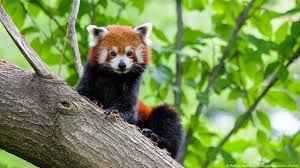
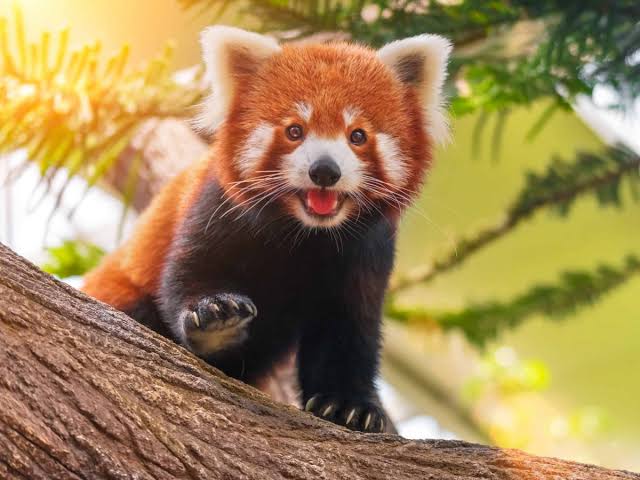
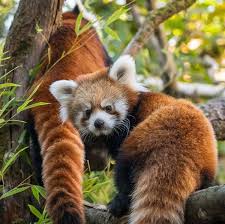
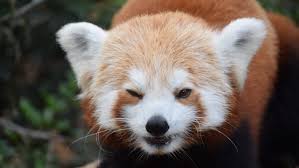
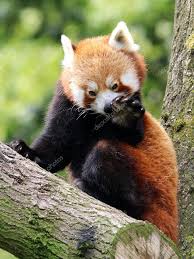
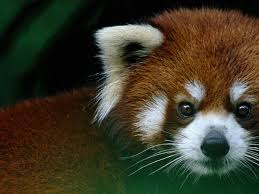
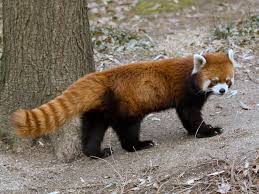
The red panda has reddish-brown fur, a long, shaggy tail, and a waddling gait due to its shorter front legs; it is roughly the size of a domestic cat, though with a longer body. It is arboreal and feeds mainly on bamboo, but also eats eggs, birds, and insects. It is a solitary animal, mainly active from dusk to dawn, and is largely sedentary during the day. It is also called the lesser panda, the red bear-cat, the red cat-bear, and the fire fox.
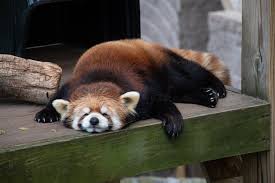
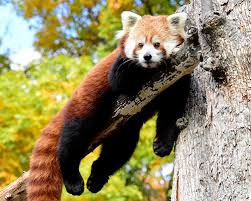
The red panda is territorial; it is solitary except during mating season. It is generally quiet except for some twittering, tweeting, and whistling communication sounds. It has been reported to be both nocturnal and crepuscular, sleeping on tree branches or in tree hollows during the day and increasing its activity in the late afternoon and early evening hours. It sleeps stretched out on a branch with legs dangling when it is hot, and curled up with its tail over the face when it is cold.[10] It is very heat-sensitive, with an optimal "well-being" temperature between 17 and 25 °C (63 and 77 °F).
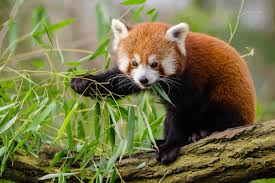
Red pandas are excellent climbers, and forage largely in trees. They eat mostly bamboo, and may eat small mammals, birds, eggs, flowers, and berries. In captivity, they were observed to eat birds, flowers, maple and mulberry leaves, and bark and fruits of maple, beech, and mulberry.
| LIFESPAN : | 8 - 10 years |
|---|---|
| CONSERVATION STATUS : | Endangered (Population decreasing) |
| LENGTH : | 58 cm (Adults) |
| CLASS : | Mammalia |
| KINGDOM : | Animalia |
| FAMILY : | Ailuridae |
| MASS : | 3 - 6 Kg |
WHERE WILL YOU FIND THEM:
You can find them at pen B15, right next to the koalas.
Gallery