PANDA BEAR
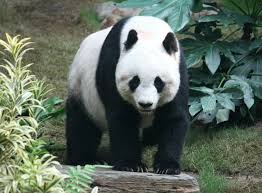
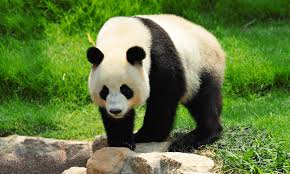
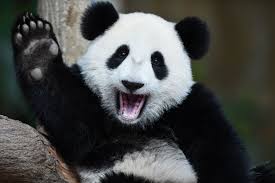
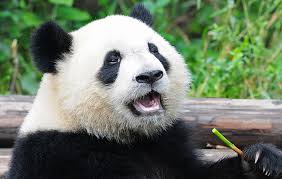
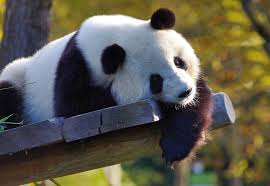
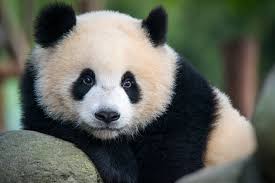
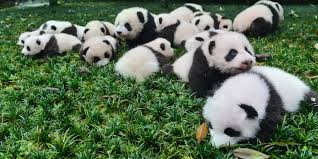
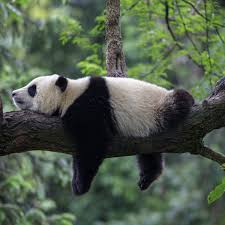
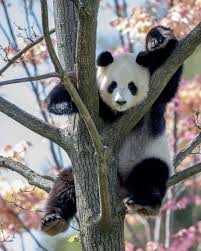
The giant panda, also known as the panda bear (or simply the panda), is a bear native to South Central China. It is characterised by its bold black-and-white coat and rotund body. The name "giant panda" is sometimes used to distinguish it from the red panda, a neighboring musteloid.
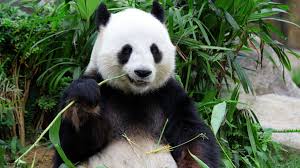
Though it belongs to the order Carnivora, the giant panda is a folivore, with bamboo shoots and leaves making up more than 99% of its diet. Giant pandas in the wild will occasionally eat other grasses, wild tubers, or even meat in the form of birds, rodents, or carrion. In captivity, they may receive honey, eggs, fish, yams, shrub leaves, oranges, or bananas along with specially prepared food.
For many decades, the precise taxonomic classification of the giant panda was under debate because it shares characteristics with both bears and raccoons. However, molecular studies indicate the giant panda is a true bear, part of the family Ursidae. These studies show it diverged about 19 million years ago from the common ancestor of the Ursidae; it is the most basal member of this family and equidistant from all other extant bear species. The giant panda has been referred to as a living fossil.
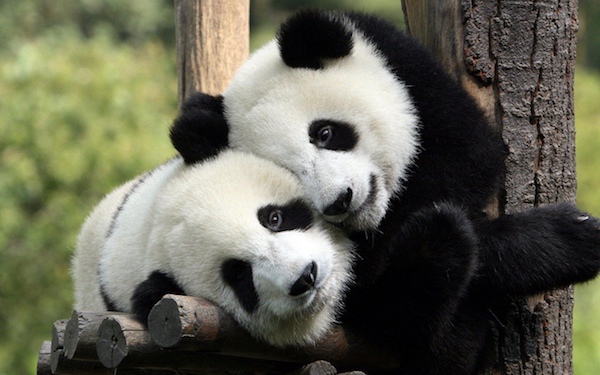
The giant panda is a terrestrial animal and primarily spends its life roaming and feeding in the bamboo forests of the Qinling Mountains and in the hilly province of Sichuan. Giant pandas are generally solitary. Each adult has a defined territory and a female is not tolerant of other females in her range. Social encounters occur primarily during the brief breeding season in which pandas in proximity to one another will gather. After mating, the male leaves the female alone to raise the cub.
| LIFESPAN : | 20 years |
|---|---|
| HEIGHT : | 60 - 90cm (Adult, At Shoulder) |
| GESTATION PERIOD : | 95 - 160 days |
| CLASS : | Mammalia |
| KINGDOM : | Animalia |
| FAMILY : | Ursidae |
| MASS : | 70 - 120 Kg (Adults) |
WHERE WILL YOU FIND THEM:
You can find them at pen B20, North North West of tyhe zoo entrance.
Gallery